3 Axle petrol tanker trailer, also known as fuel trucks, tank trucks or truck tankers, are specialized vehicles which transport liquid fuels in large tankers placed where a regular truck would load a cargo trailer. These tankers are designed specifically to contain and safely transport fuels like petrol, diesel and even heavy fuel oil (HFO).
Many different types of tankers exist as each type caters to the fuel they transport. Some trucks, like road trains, can carry up to five tankers all filled with fuel!
3 Axle 45000 liters petrol tanker trailer can be semis that carry tankers, or straight trucks. They vary in size, structure and load capacity. Large trucks often carry out heavy-duty loads, like transporting huge quantities of fuel to petrol stations. Smaller trucks are used to transport fuel like liquid petroleum gas (LPG) or liquid propane.
Depending on their cargo, these fuel trucks can be constructed from materials like aluminum, stainless steel, or fiberglass reinforced plastic. These trucks can also transport liquid materials like milk, sewerage and asphalt, as well as chemicals, grains and sand.
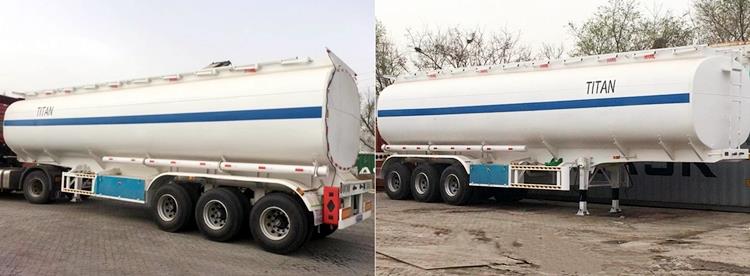 Tri Axle Petrol Tanker Trailer for Sale In Zimbabwe
1. Bottom Valve
Tank trailer drivers are always advised to inspect and this other valve before loading the truck 45000 liters petrol tanker trailer for their own safety.
The quick cut off also prevents leakage and explosion in an accident. The quick cut-off is enough to save lives and prevent loss of the liquid being transported.
The bottom valve is generally installed in an oil tank trailer’s outlet. In case of a crash in an accident, the valve can cut off the pipeline in 5 seconds. This ensures the safety of the cargo and people in the car.
2. Spill-Proof Sensor
When the liquid reaches the right height, the whistle or alarm stops. The sensor in this case plays the role of a filling up alarm. In addition, the whistle stops with the liquid insider the tank discharge empty.
The spill-proof sensor is the alarm installed on the manhole cover. The sensor produces a sound or noise whenever the height of the liquid inside the tank changes quickly.
3. Air Release Valve
One of the important components of the manhole cover is the respiration valve, which is also known as a relief valve. The function of the valve is to adjust the pressure inside tank automatically.
This helps to keep the pressure within a certain range. The relief valve protects the tank and reduces the volatilization loss of volatile oil.
A small and medium tank has one breather valve for all the compartments. A large tank, on the other hand, has breathing valves for each compartment. The body of the respiratory valve is made of stainless steel with nickel-cadmium. All other parts are made of stainless acid-resistant steel to prevent rust.
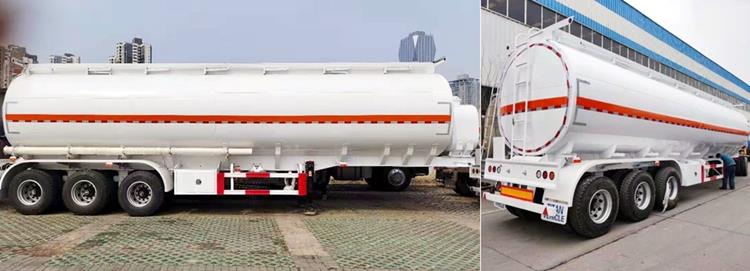 Petrol Tanker Trailer for Sale Price Manufacturer
4. Fuel Outlet Valve
The special structure used in the fuel outlet valve help in ensuring that there is no oil leakage when the joint is removed.
This valve is used for quick unloading of the liquid in the tank. Its internal structure complies with fluid mechanics and can minimize internal pressure during a large flow.
5. Manhole Cover
The manhole cover is simply the cover on the petrol trailer’s manhole. The cover has important components that you should know about, which keep the tank safe.
6. Oil Vapor Recovery Valve
Other oil gas recovery devices are used to condense and reuse oil gas. The oil gas from volatile can be recovered to the oil tank, which prevents leakage of the oil gas.
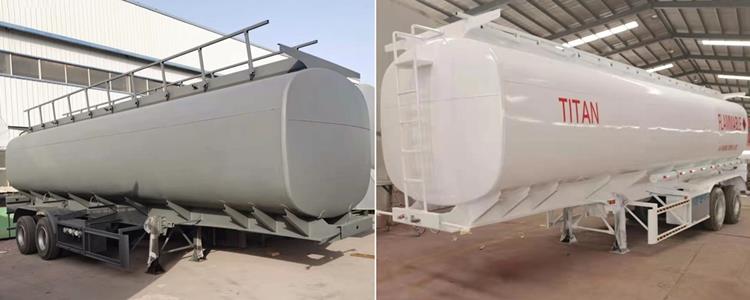 Tri Axle Petrol Tanker Trailer for Sale
The smaller-capacity 3 axle petrol tanker trucks transport liquid cargo throughout a local community. These types of petrol tank trailer price are typically used at airports to fuel aircraft. Small tankers also deliver domestic fuels, such as liquefied petroleum gas, to homes. This type of tanker normally carries less than 1,000 gallons. Large tankers transport more than 11,000 gallons and carry various liquids, including hazardous materials.
Many petrol tanker trucks are capable of transporting various liquids simultaneously. These tankers use several compartments and are capable of transporting a variety of liquids, including industrial chemicals, concrete, diesel, milk, gasoline and water. Each individual liquid has a different density, which alters the tanker’s maximum carrying capacity.