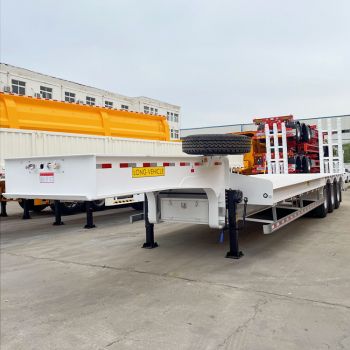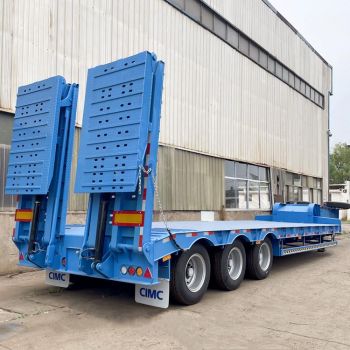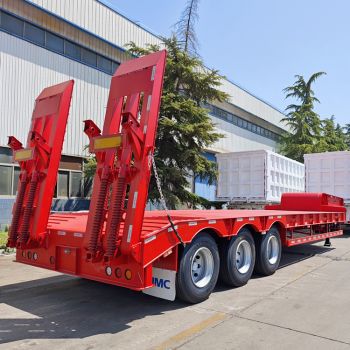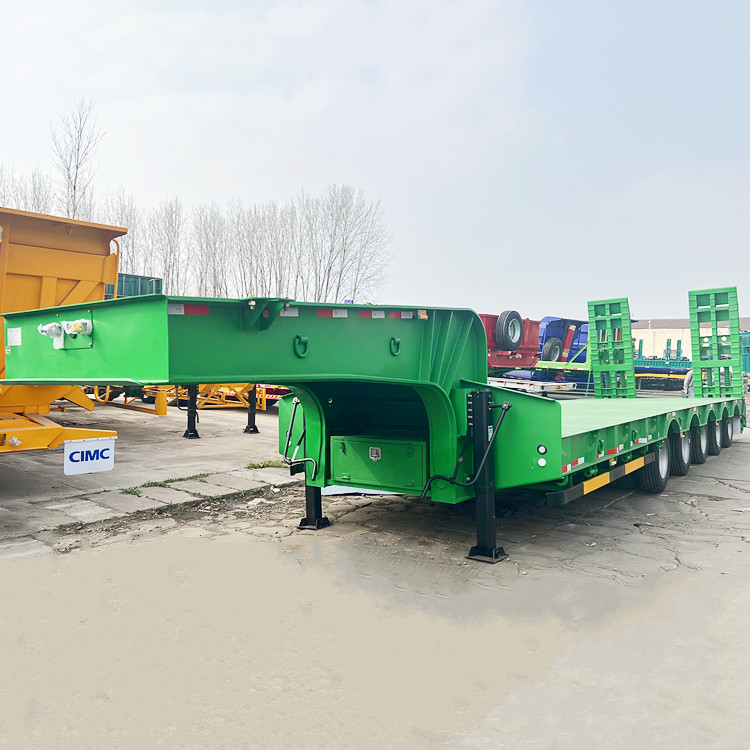
The CIMC 5 axle low bed trailer price is not determined by a single factor but by a combination of aspects, including vehicle configuration, load bearing capacity, materials, axle brands, and customization requirements.
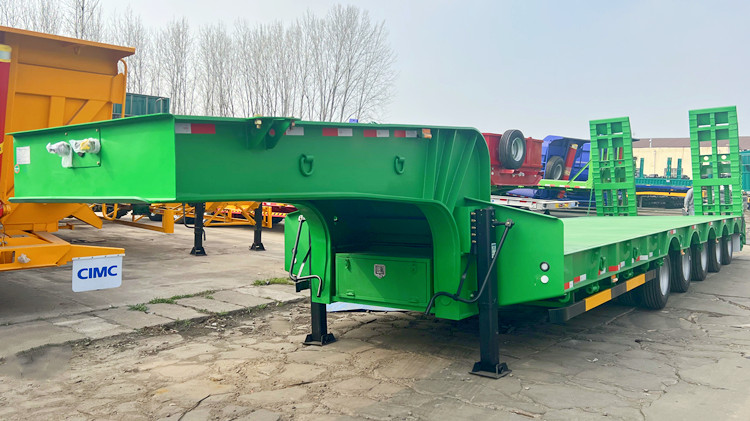
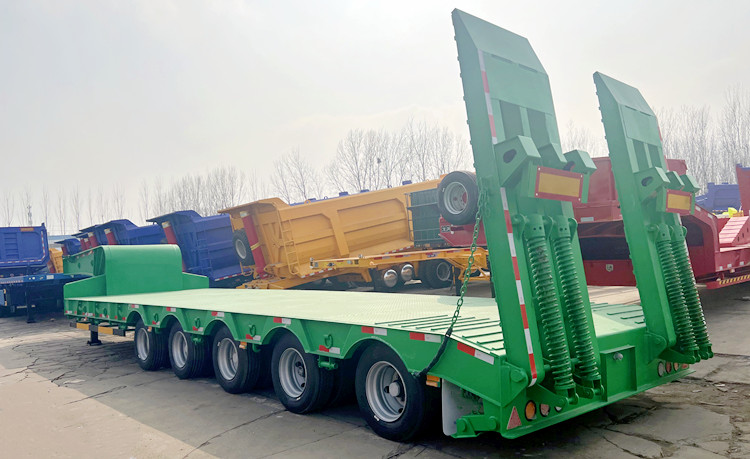
The 5 axle design of the CIMC low bed trailer truck effectively distributes the weight of 120 ton class loads, reducing the pressure on individual axles and tires and enhancing vehicle stability under heavy load conditions; it is particularly well-suited for transporting excavators, bulldozers, loaders, road rollers, large transformers, and other heavy engineering equipment.
Constructed from high strength steel, the 5 axle 120 ton CIMC low bed trailer truck features professionally engineered main beams and load bearing platforms capable of withstanding the stresses of long-term, high intensity heavy load transport.
Low bed trailer $800 off! Contact us for details.

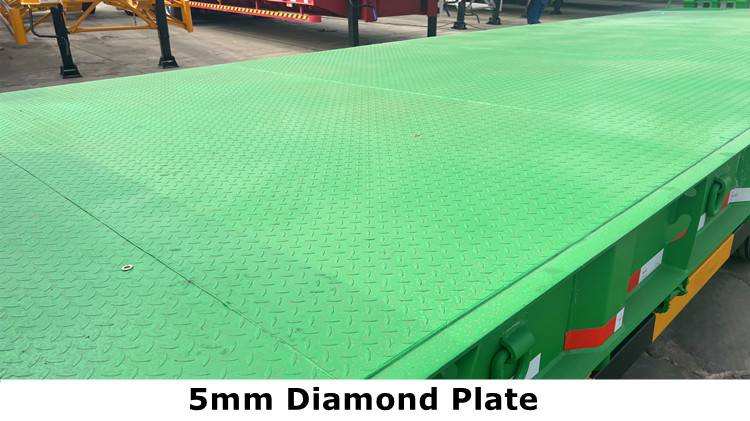
Low bed trailer $800 off! Contact us for details.
Dimension(mm): 15800x3000x3750mm
Loading capacity(ton): ≤120T
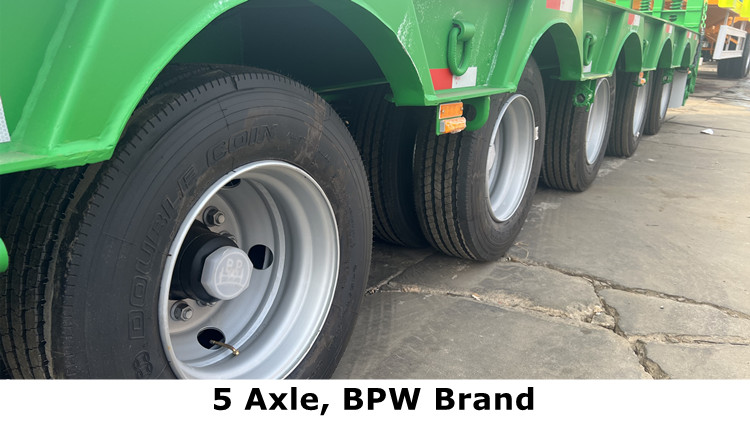
Axles: 5 axle lowbed trailer, BPW brand
Tire: 20 units, 12R22.5
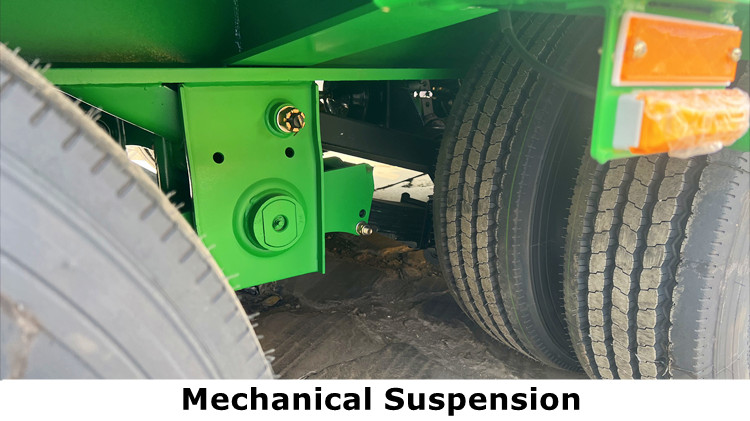
Suspension: Mechanical suspension
Ramp: Spring ramp
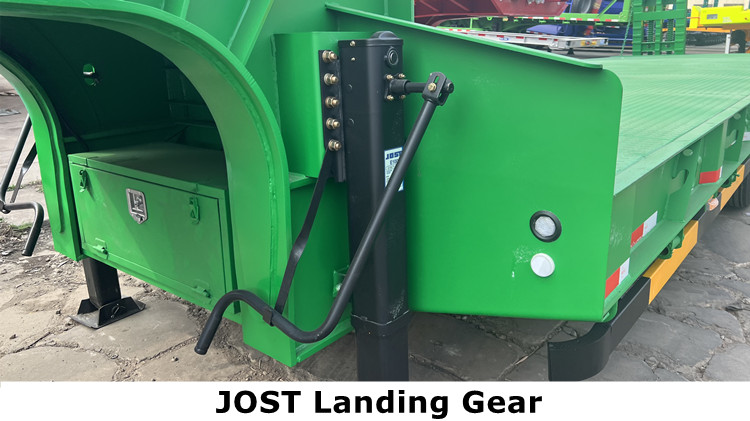
Landing gear: JOST
Brake system: WABCO
The CIMC 5 axle low bed trailer price is not determined by a single factor but by a combination of aspects, including vehicle configuration, load bearing capacity, materials, suspension systems, axle brands, and customization requirements.
1. Frame structure and steel materials determine the base price
CIMC low bed trailer truck must withstand immense concentrated loads; therefore, critical structural components—such as the main beams, cross-members, side beams, and the gooseneck—typically require high strength steel and reinforced designs. The specifications, thickness, strength grade, and quantity of steel used directly impact the vehicle's cost. For vehicles frequently transporting heavy equipment like excavators, mining machinery, or transformers, the frame usually requires a more robust structure to ensure sufficient resistance to bending and torsion during long-term heavy-load transport. Consequently, the more material used in the frame and the more reinforced the structure, the higher the CIMC 120 ton low bed truck price tends to be.
2. Axle quantity and brand influence the price
The CIMC 5 axle low bed trailer utilizes five axles; compared to standard 3 axle or 4 axle models, the quantity of axles, tires, suspension components, and braking parts is significantly higher. Furthermore, there are notable price differences between axle brands. Using standard domestic axles results in relatively lower costs, whereas opting for renowned brands (such as BPW axles) raises the CIMC 120 ton low bed truck price. Given the 120 ton load requirement, the load bearing capacity and reliability of the axles are critical considerations; thus, axle selection cannot simply follow the configuration used for standard semi-trailers.
3. Platform dimensions and customization determine the final configuration
As cargo dimensions vary among customers, the length, width, platform height, and gooseneck dimensions of the 120 ton low bed trailer can be customized. For instance, transporting large excavators may require a longer platform, while wide construction equipment might necessitate a wider platform; transporting machinery of varying heights could require a lower deck height. Certain models also offer additional features such as extendable platforms, hydraulic ramps, folding ramps, or detachable goosenecks. The more customization involved, the greater the manufacturing complexity and material costs, leading to a higher final CIMC 120 ton low bed truck price.
4. Ramp configuration also affects the price.
Using standard mechanical ramps results in relatively lower costs; however, opting for hydraulic ramps, folding hydraulic ramps, or heavy duty ramp systems facilitates the loading and unloading of large construction machinery, even though the inclusion of hydraulic systems, cylinders, pump stations, and control units increases the CIMC 5 axle low bed trailer price. For customers who frequently transport equipment such as excavators, bulldozers, and loaders, hydraulic ramps—despite the higher initial purchase price—significantly improve loading and unloading efficiency.